
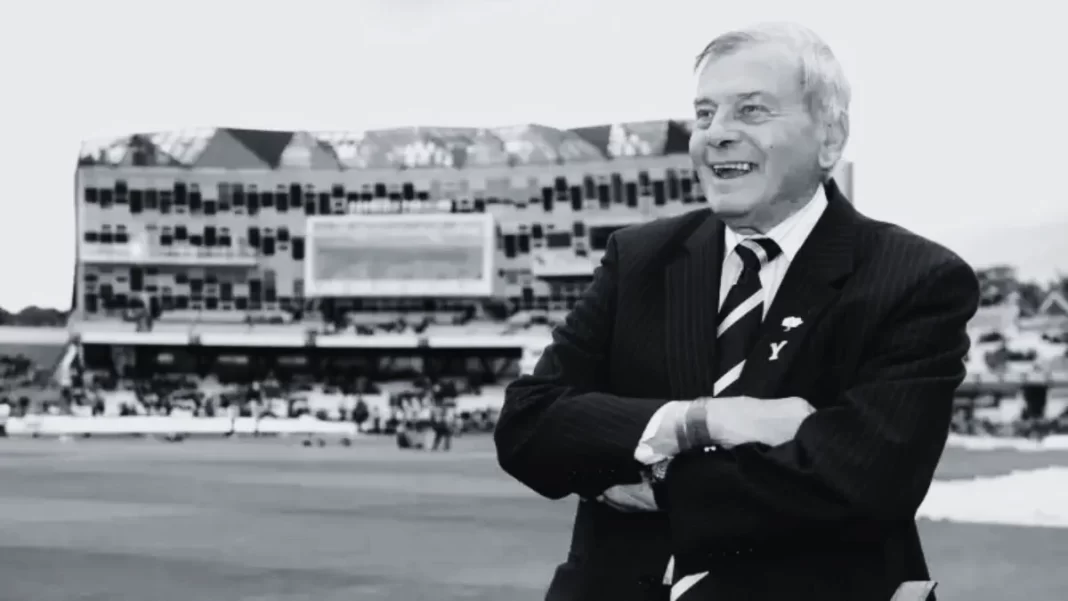

When cricket legends come to mind, it’s easy to think only of iconic batsmen and bowlers. But what about the man standing behind the stumps, making decisions that could change the fate of matches, and sometimes, entire careers? That’s the story of Dickie Bird: the umpire who didn’t just call balls and strikes but changed the game forever. So, let’s take a look at his legacy as we remember him for one last time.
Dickie Bird: The Man Behind The Stumps
Dickie Bird’s early career began as a talented first-class batsman for Yorkshire and Leicestershire. Unfortunately, a knee injury prematurely ended his playing days at 32. Rather than fading away from the sport, Bird found his true calling as an umpire.
Making his umpiring debut in English county cricket in 1970, he quickly rose through the ranks and stood in his first Test match in 1973 at Headingley, Leeds. Over a 23-year umpiring career, he officiated in an impressive 66 Test matches and 69 One Day Internationals, a record at the time, and was the man behind the stumps for three Cricket World Cup finals, including the historic 1983 final when India stunned the West Indies.
Yet, it wasn’t just his on-field presence that made Dickie Bird a legend. His withdrawal from elite umpiring in the late 1990s was not a quiet retreat but a dignified exit on top. Facing the inevitable march of technology and younger umpiring talent, Bird stepped down with grace, ensuring his legacy was one of respect and integrity. He showed the world that sometimes knowing when to bow out is just as important as knowing the rules of the game.
Besides his umpiring feats, Dickie Bird’s contributions extended off the field. He was named president of the Yorkshire County Cricket Club in 2014, a role he embraced while witnessing the club’s County Championship triumphs.
His autobiography became the best-selling sports book in the UK, selling over a million copies, and he became a beloved cricketing raconteur and television personality. He was recognised with an MBE in 1986 and an OBE in 2012, honouring his outstanding contribution to cricket.
In remembering Dickie Bird, we remember more than an umpire. We celebrate a standard of excellence that changed cricket forever, not with flashy plays but with commitment to the game’s soul.
Also read: Top 4 Players With Most Runs In County Championships


